


Most Americans are familiar with the idea of being watched in public, but there is a major difference between occasionally being seen and systematically being tracked. That distinction is becoming harder to ignore as automated license plate reader systems continue spreading across the United States. These cameras, many of them operated through Flock Safety, are now positioned at neighborhood entrances, shopping centers, roadways, intersections, schools, churches, business parks, apartment complexes, and municipal corridors. They do not look especially remarkable from the road, but collectively they represent one of the fastest-growing surveillance infrastructures in the country.
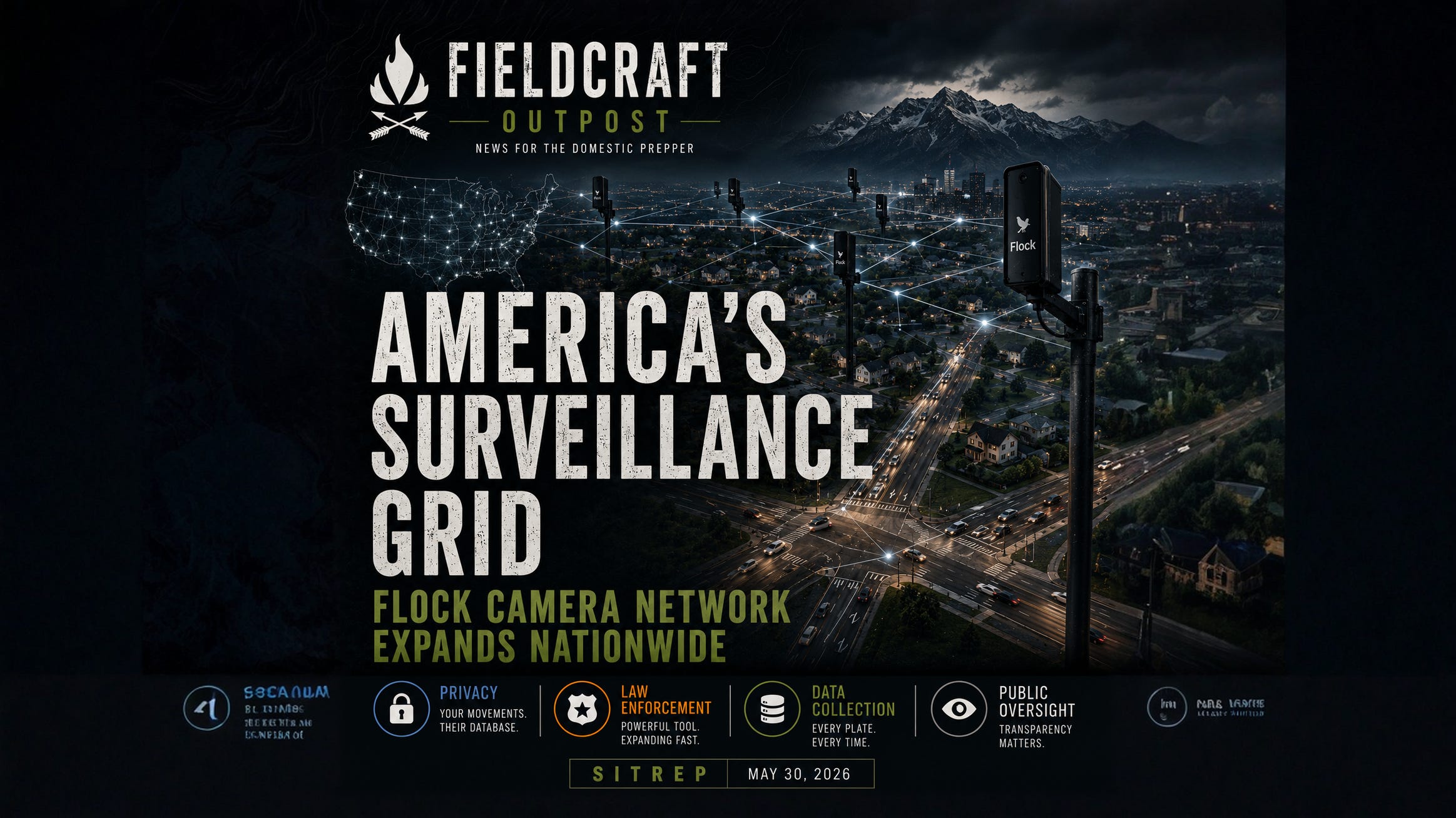
Flock Safety has grown from a neighborhood security startup into a national public safety technology company operating in thousands of communities across nearly every state. Publicly reported figures put the company’s reach at more than 5,000 communities, over 4,800 law enforcement agencies, and more than 20 billion license plate reads every month. On an annual basis, that means the network may process roughly 240 billion vehicle observations. That number matters because it reframes the conversation. This is not about a single police camera watching a dangerous intersection. This is about a distributed network capable of collecting, storing, searching, and analyzing vehicle movement at a scale that would have been impossible only a generation ago.
The appeal of the technology is obvious. Law enforcement agencies use automated license plate readers to locate stolen vehicles, identify suspect vehicles, recover missing persons, and connect vehicles to criminal investigations. In communities dealing with limited police staffing and increased investigative workloads, the system functions as a force multiplier. A vehicle connected to a crime can be identified within minutes. A stolen car can be located after crossing into another jurisdiction. A detective can reconstruct travel patterns that previously would have required hours or days of manual investigation. According to company impact reporting, Flock systems have assisted in more than one million investigations and incidents, while also contributing to the location of thousands of missing persons.
Those results are why cities, counties, police departments, homeowners associations, and private property managers continue adopting the technology. Public safety is a powerful argument, and it should not be dismissed casually. A parent whose missing child is found, a victim whose stolen vehicle is recovered, or a community dealing with organized theft may view these cameras as a practical and necessary tool. The problem is that useful technology does not become less significant simply because it produces positive outcomes. In many cases, the more effective a surveillance tool becomes, the more important it is to understand its long-term implications.
The real concern is scale. A single camera observes a fixed location. A connected network observes movement. Once thousands of cameras are tied into searchable databases, the system no longer functions like a traditional security camera. It begins to resemble a movement-tracking infrastructure. Each additional camera increases coverage. Each participating agency expands the reach of the network. Each improvement in artificial intelligence makes the collected data more useful. Over time, what begins as a targeted investigative tool can evolve into a broad visibility platform capable of mapping ordinary travel patterns across entire regions.
This is where the issue becomes relevant to preparedness. Preparedness is not just food storage, water filters, radios, medical kits, firearms, or off-grid gear. At its core, preparedness is environmental awareness. It is the ability to recognize changing conditions before those conditions affect your freedom of movement, personal security, economic stability, privacy, or decision-making. The same mindset that tracks supply chains, inflation, energy vulnerability, crime patterns, and geopolitical instability should also pay attention to the rapid growth of surveillance technology. A citizen who understands the operating environment is better positioned than one who only reacts after the environment has already changed.
The modern surveillance environment is not limited to cameras. Smartphones generate location data. Vehicles collect and transmit information. Navigation apps record travel patterns. Credit card transactions create behavioral trails. Toll systems, parking systems, social media platforms, facial recognition tools, and smart city infrastructure all contribute to a broader ecosystem of data collection. Automated license plate reader networks are important because they connect that digital ecosystem to physical movement on public roads. They add another layer to a world where privacy is increasingly shaped not by whether information exists, but by who can access it, how long it is stored, and how easily it can be searched.
That is why the growth numbers matter. Twenty billion monthly vehicle reads is not a small local program. Thousands of communities and thousands of law enforcement agencies using interconnected systems is not a minor technology trend. Tens of thousands of cameras feeding into searchable databases creates a new kind of public infrastructure. Whether that infrastructure is ultimately used responsibly depends on policy, oversight, transparency, and public pressure. Without those safeguards, the concern is not merely what the technology does today, but what it could become tomorrow.
The preparedness community should not approach this issue with panic or conspiracy thinking. The better approach is disciplined awareness. The cameras are real. The growth is real. The public safety benefits are real. The privacy concerns are also real. Citizens should be asking how long data is retained, which agencies can access it, whether information can be shared across state lines, what prevents misuse, how false matches are handled, whether private entities can contribute to law enforcement databases, and whether local communities are even aware when these systems are approved.
America is not moving toward less surveillance. It is moving toward more. The cameras will become more capable, the databases will become larger, artificial intelligence will become more effective, and the systems will become more integrated. That does not automatically mean the technology is evil, but it does mean the public should be paying attention. Once surveillance infrastructure becomes normal, it rarely disappears. The question is whether Americans will demand accountability while the network is still being built, or whether they will wait until the system is too large to challenge.
Fieldcraft Outpost - News for the Domestic Prepper
Be prepared,
Mike Glover, Founder
Fieldcraft Outpost
Great article Mike, makes you think.
Mike. I have friends and acquaintances here in my small E Tennessee city who have no idea they’re being surveilled. Flock means animal groups. Smart devices are, “Sooooo convenient”. “Can’t even conceive living without my phone today”. “I can see the world at my fingertips”. The fact someone’s looking back and keeping track and taking notes never occurs to them. To suggest that is happening today and growing, even turning the US into a surveillance police state is to question your Christianity!
But great article.